

Wellness travel has left the spa, new GSIQ and FINN Partners research finds
 Three in four international travellers have taken an active wellness trip abroad in the past two years. Our new report with FINN Partners shows that sport, nature and community are now delivering what the spa break used to promise.
Wellness travel used to mean a robe, a treatment menu and a quiet week. Not any more. Three in four international travellers (75%) have taken an active wellness-focused trip abroad in the past two years, and much of that activity looks more like a race weekend or a hiking trip than a spa retreat.
That is the central finding of Wellness Travel on the Move: The Communities, Experiences and New Purposes Reshaping Wellness Travel Around Sports, Nature and Retreats, the new report from GSIQ and FINN Partners. It draws on insights from more than 7,000 international travellers across nine markets.
For GSIQ, the brief was to examine wellbeing tourism where we know it best: at the point where sport, culture and travel meet.
“Wellness travel is no longer only about slowing down,” said Eva Stewart, Global Managing Partner at GSIQ. “Sport is merging with culture and lifestyle, women’s sport is surging, and the experience economy keeps growing, and together they are changing not just how we travel, but why. We wanted to look at wellbeing through an active lens and give destinations and brands the evidence to build for what people are travelling more for.”
Sport is now a wellness product
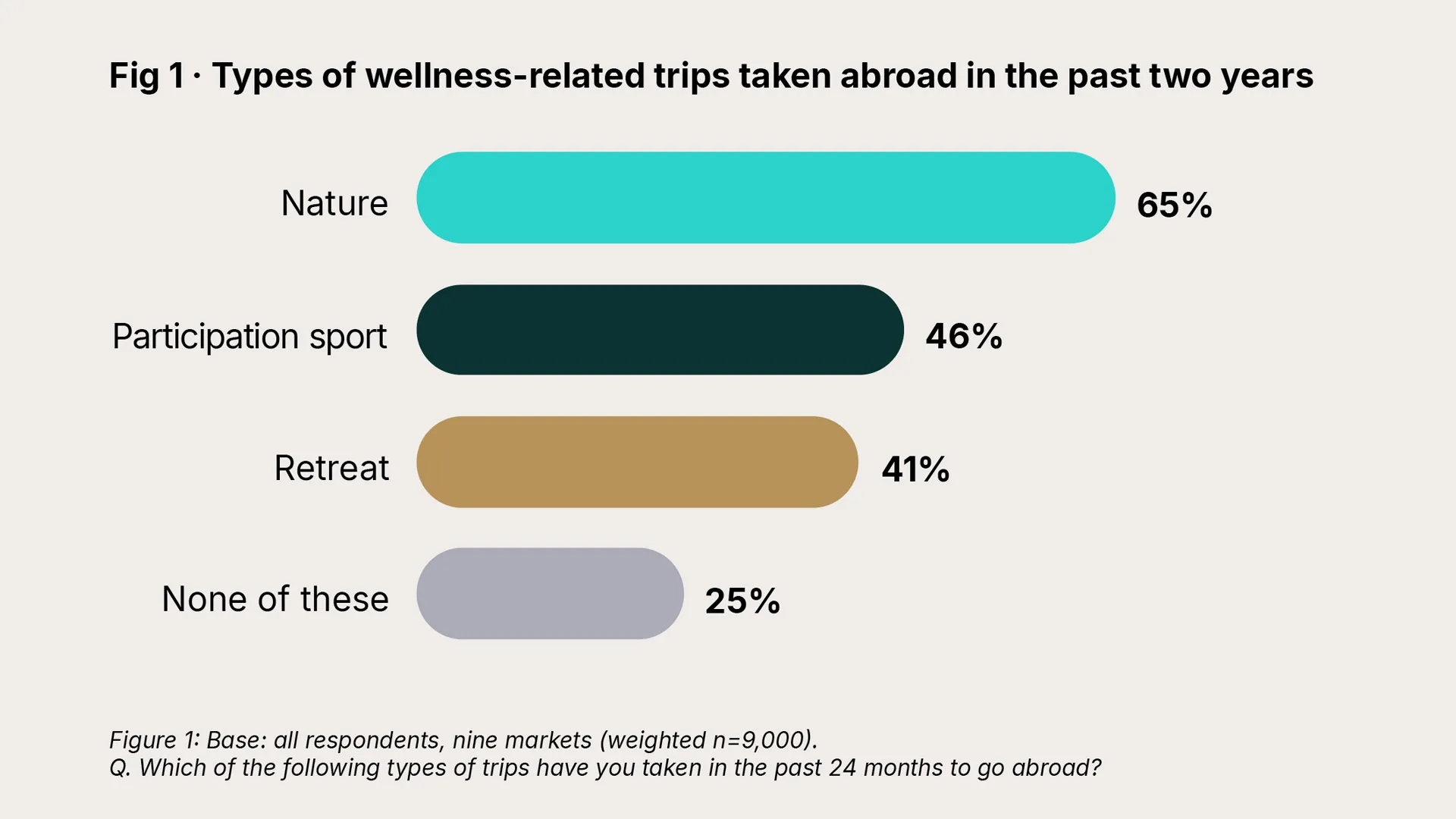
So what counts as a wellness trip today? Nature-based travel leads participation at 65%, but sports-focused travel comes second at 46%, ahead of wellness retreats on 41%. Running clubs, hiking communities, destination sporting events and outdoor adventures are delivering many of the same outcomes as a conventional wellness break.
Retreats themselves are changing too, moving beyond yoga and spa into recovery, performance, women’s health, burnout prevention and personal development. As Cathy Feliciano-Chon, Managing Partner at FINN Partners, puts it, the most interesting wellness trips today may be the ones travellers don’t actually call “wellness”.

Travellers come home with more than they went for
The report compares what people hoped to get from their trip with what they actually experienced, and the gap runs in the traveller’s favour. Just over a third (35%) set out seeking connection, yet half (51%) came back reporting it. Confidence showed the largest gain of all: 38% hoped to build it and 55% did.
Community sits behind much of that. Debbie Flynn, FINN Partners’ Global Travel Practice Leader, points to the growth in solo travel, particularly among women, and notes that solo does not mean wanting to be alone. More travellers are setting off independently and looking to meet like-minded people along the way.
Here’s the commercial headline
The next phase of growth in wellness travel is unlikely to be decided by amenities. The report argues it will go to the destinations and brands that broaden their definition of wellness, build experiences around passions and communities, and sell the outcome rather than the activity: connection, confidence and recovery, not just a list of what is on offer.
For destinations, that means the marathon, the trail network and the supporters’ club belong in the wellness strategy. For sports rightsholders and event organisers, it means your event may already be part of someone’s wellbeing, and can be positioned that way.
The findings were previewed at FINN Partners’ Global Lifestyle Voices Summit and at World Travel Market London, before being formally unveiled at the Global Wellness Summit.
Download the full report. Want to know what active wellness travellers mean for your destination, event or brand? Get in touch.
GSIQ Tourism Insights – Global Tourism, News, Insights
Explore our dedicated Tourism Insights page and discover how we’re shaping the future of global tourism.


